

Video
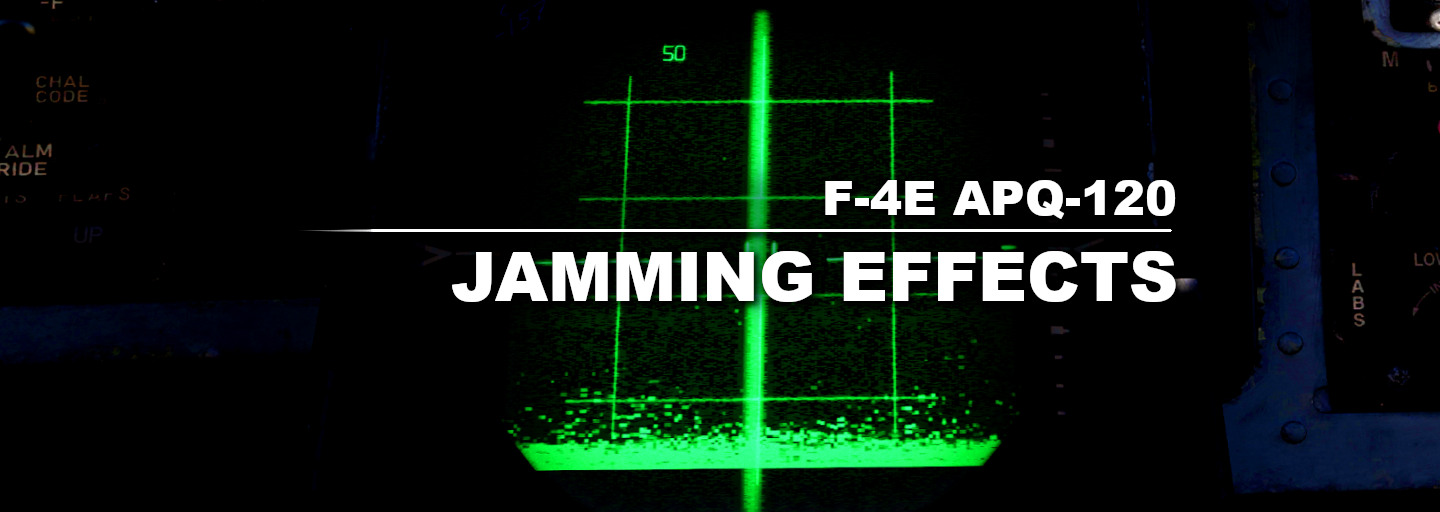
A vertical line of “rubbish” appears if a jamming aeroplane is near the radar’s scan volume, not necessarily within. Intuitively, since the ordinate of the radar scope represents the range, a contiguous line indicates the inability to discern such a parameter.
This effect persists until the radar overcomes the ECM at a range known as the “burn-through range”. After which the radar system can again determine the target’s distance.
Exaple I
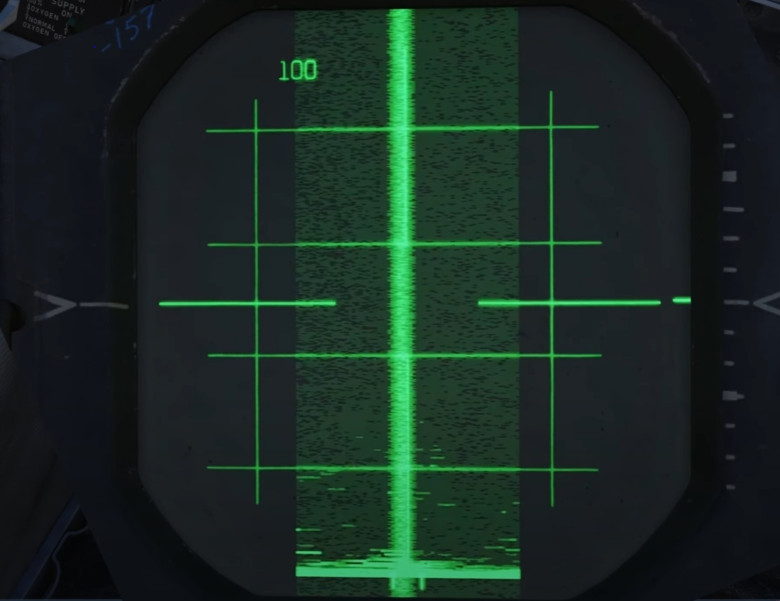
The video above shows a MiG-21 intermittently emitting and the effects of changing radar options on the clarity of the radar image. The starting slant range is circa 80 nm, and the toggle happens every couple of miles. Parallel to the emitter, another Fishbed flies at the same speed and direction.
The first noticeable effect is how the noise affects the radar display, almost blinding it. Next, since we know the initial distance, how visible the MiG-21 is: the detection range for such an aeroplane is circa half of the current range. Ergo, jamming makes the emitting aircraft very visible and much farther than it would be otherwise.
Given the clutter generated, the WSO can tune down the gain to ignore the jamming signal. However, this effect is achievable only if the range is large enough; otherwise, the ECM will still affect the APQ-120. On a positive note, this gives the WSO a tool to build SA and approximate the target’s range.
As the distance decreases, we approach the burnthrough-range. Other modern radars in DCS have a set-in-stone range, but the Phantom is different, as the “Gain” settings can help the WSO to discern the return through the clutter, but it can also work against them if set incorrectly.
Home-on-Jam
Although the WSO can manually track the variations in altitude and azimuth, the APQ-120 is capable of entering the so-called “Home-On-Jam” mode, where the avionics automatically track angles. For this to happen, the jammer-generated noise must exceed a set threshold.
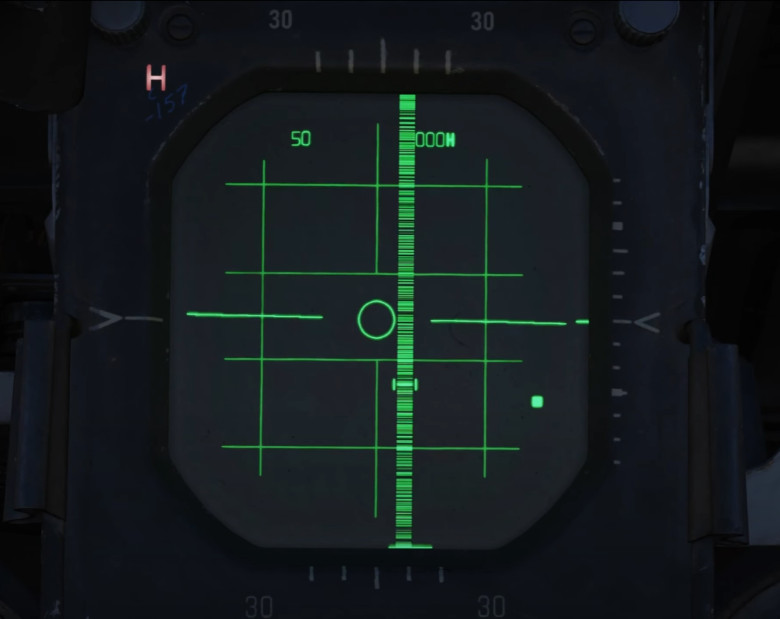
When the distance between the Phantom II and the locked target is less than the burn-through range, the APQ-120 switches automatically to standard tracking.
Example II
In this example, included in the video above, the F-4E is intercepting a Tu-22, NATO name “Backfire”, which is using Electronic Countermeasures to deny the range the crew range determination.
Initially, HOJ mode is unavailable, as the signal appears on the radar display but is not strong enough for the avionics to follow. Note how the signal is becoming more and more visible on the radar screen in the left image, taken a few seconds after the right one.
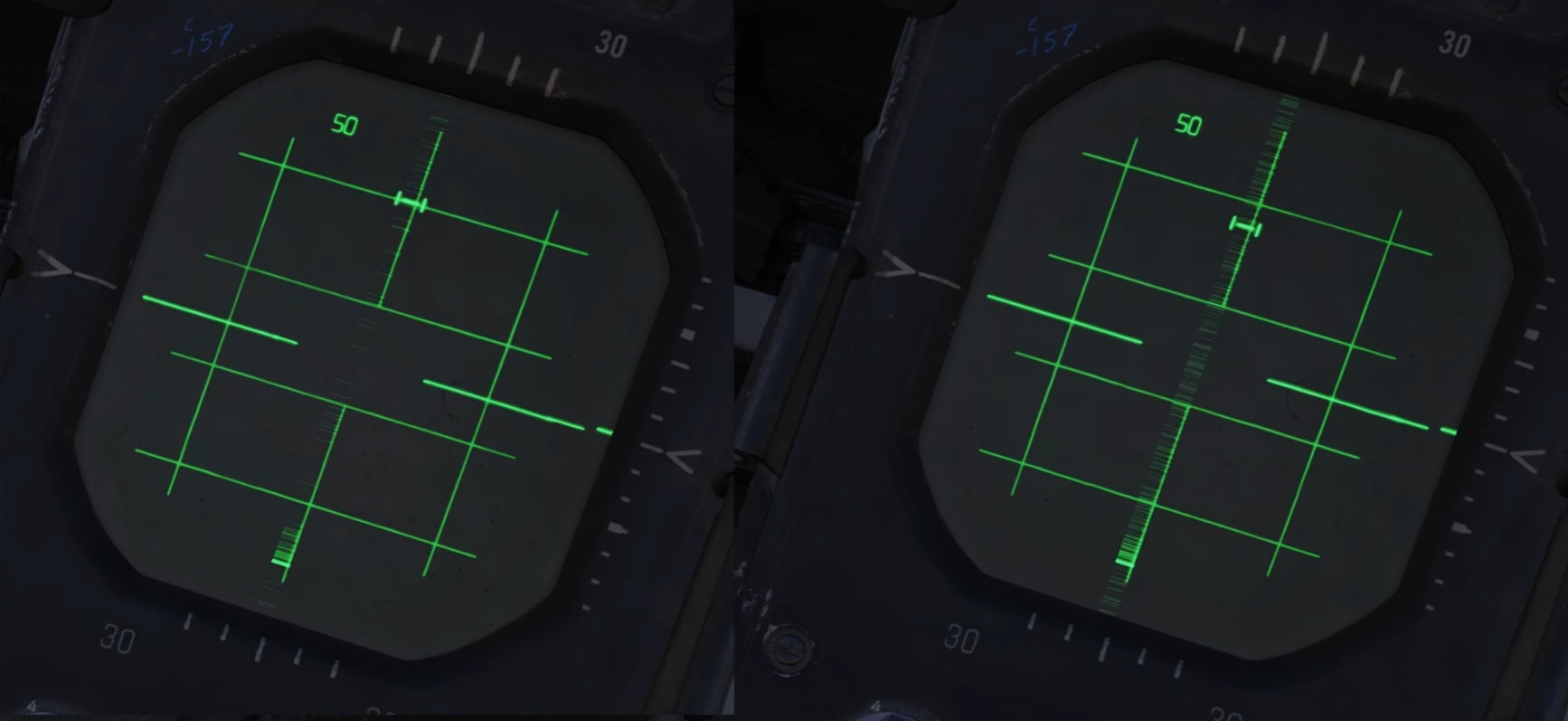
As the range decreases, two things happen. In primis, the contact reflects more radar waves, making itself visible on the radar screen. This “shadow” allows the WSO to track the range manually and, in certain conditions discussed in a dedicated video, employ the AIM-7 Sparrows. Next, the range is short enough for Home-on-jam tracking to be attempted, initially unsuccessfully. Eventually, the range decreases enough for the APQ-120 to pierce through and properly track the Tupolev.
Note that the WSO can disable the automatic HOJ mode by setting the 3-way Track Switch to “AOJ OUT”.
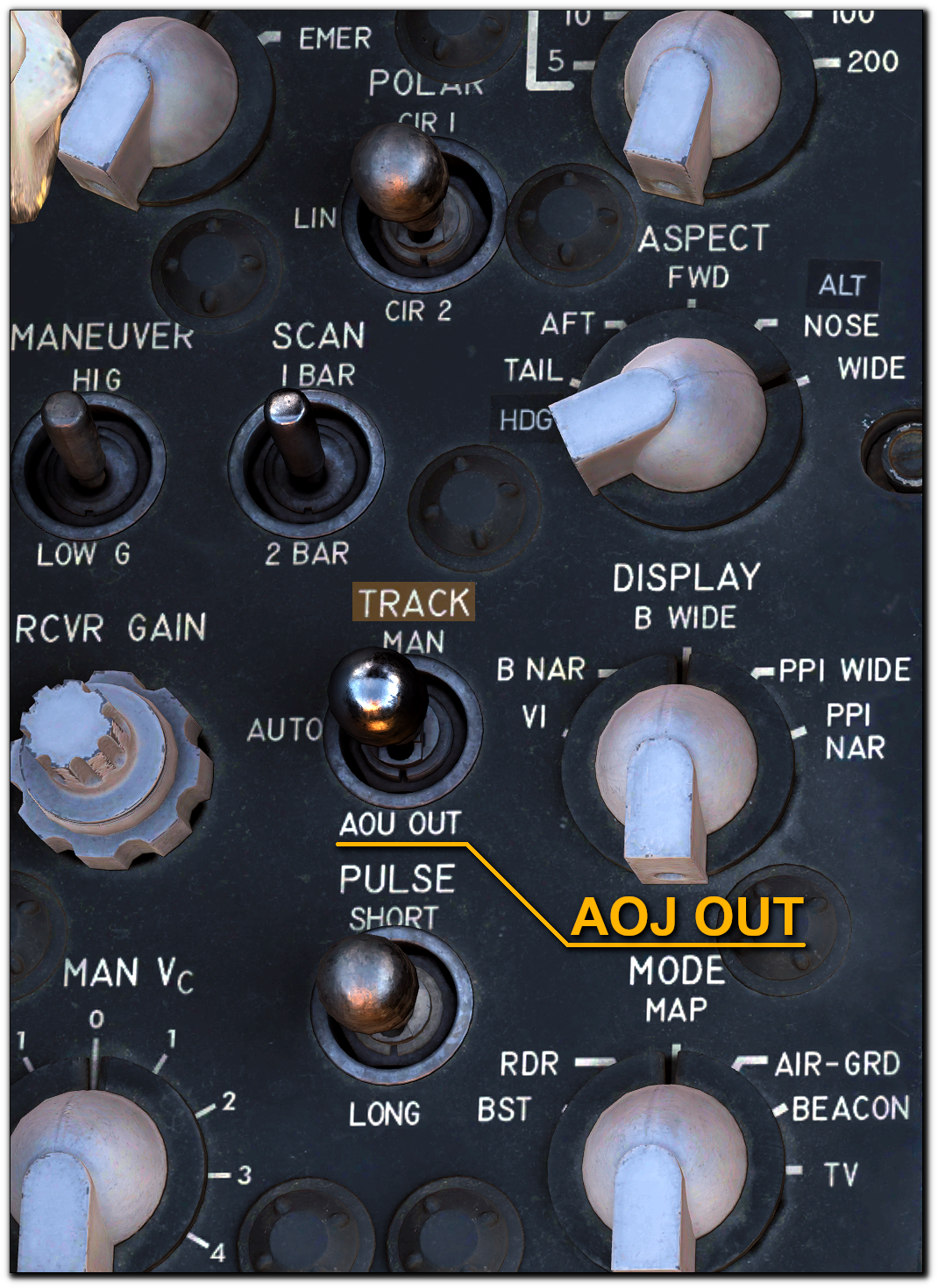
The AOJ OUT label appears incorrectly in this pre-launch image. It will be fixed at launch or shortly after.
Determining range
As mentioned, noise jammers negate the determination of the aeroplane’s range. Similarly to the Tomcat, the lack of range information makes the employment of missiles more problematic, although less or at least differently than when the fighter sports long-range weapons such as the AIM-54 Phoenix.
The effective range of the AIM-7 is, in fact, quite limited, and the Phantom crew may cross the burn-through threshold before entering the weapon’s envelope. In such a case, all the launching parameters can be obtained and the missile employment proceeds as usual, with the added benefit of how visible a jamming target is from APQ-120 and the missile’s seeker perspective.
The question is how the range can be determined, and the answers vary: in the Tomcat, both LINK 4A and LINK 4C, the Controller and especially the TCS can be used to assess it. The F-4E has instead to rely on the Controllers or, with the DMAS upgrade, the TISEO, the acronym for Target Identification System, Electro-Optical, could probably be beneficial as well.
That being said, if the crew wants to engage a jamming target before the range can be determined, they can rely on the mentioned Home-on-Jam to have the Sparrow homing on the jamming signal.
This concludes the overview of the APQ-120 and ECM effects. A dedicated article will discuss employment methods and technical and tactical considerations.
TISEO footage – YouTube.
 FlyAndWire