

Video
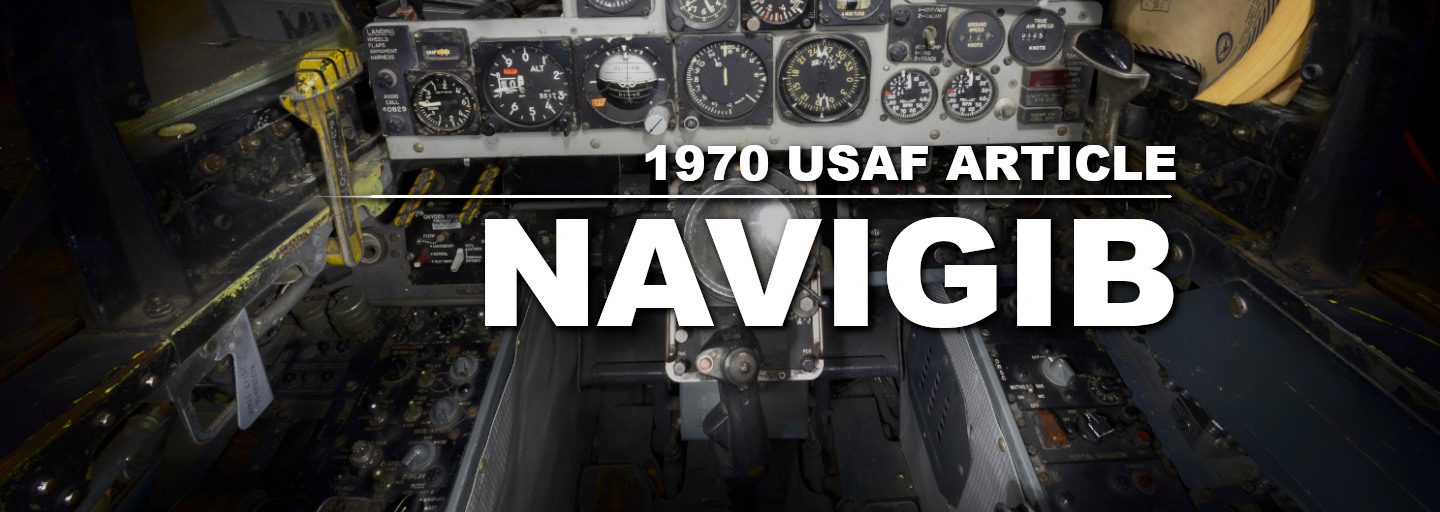
I found this text incredibly interesting as it clearly defines and describes how the backseater role was changing in the US AF, their responsibilities and duties, as new dedicated personnel were trained in this role. The US AF GIB, or Guy-in-the-Back, in fact, was previously a fully-fledged pilot, in contrast with the US Navy figure of the NFO, or Naval Flight Officer.
There we were, sixteen F-4s and four F-105s, flying at 10,000 feet above a solid cloud deck. Our target for the day was an aircraft parking area in the northwest part of town. We were briefed to expect maximum enemy defensive response in the form of fighters, SAMS, and barrage flak. Forecast weather dictated the need for radar bombing tactics, so all the flights had specially trained navigators in lead positions.
Suddenly, our F-105 support called two SAM launches, one at three o’clock and one at five. The lead in the first flight spotted one of the missiles, a non-tracker, coming through the clouds, but the other could not be seen. A moment later, a voice called, “Hondo flight, missile tracking three o’clock; take it down”. All the aircraft immediately performed SAM evasive tactics. The hard “G” manoeuvres involved, though definitely necessary, were no help to the flight lead GIBS (Guys In Back) in their task of locating the target aiming point on the radar. Luckily, the mission flight lead had located the point before the break, and the radar bombing strobes were already tracking. Final refinement was all that was required before ordnance release.
Up ahead, the expected flight path was filled with “instant black clouds” caused by 85mm antiaircraft beginning their barrage. In the background, the chatter of our fighter CAP (Combat Air Patrol) indicated that enemy fighters were being vectored toward the strike flight. We knew the CAP would do its job, so we concentrated all our efforts on hitting the assigned target. Steering was now in the capable “hands” of the F-4’s Weapon Release Control System bombing computer. Suddenly, the force commander announced that the target was visible through a hole in the clouds; the flights would make the strike visually. A quick change in switch positions and the F-4 was configured for a dive-toss mode of delivery (while still producing a good CEP, the dive-toss mode permits ordnance release at higher altitudes, thus keeping the F-4 out of small arms range). I would really have to be on the ball in providing a quick radar lockup if an automatic release were to be made.
The F-4 shuddered as the ordnance was released, and the pilot immediately began evasive manoeuvres, using the afterburner for maximum thrust. Glancing over my shoulder to assess the bomb damage, I noted that it had been a good strike. Meanwhile the other F-4s were rejoining the flight for egress. While the AC was reconfiguring his panel for the air-to-air missiles, I was searching ahead on the radar for the enemy fighters reported earlier. At the same time other GIBS in the flight were alertly scanning the six o’clock position so as to preclude a surprise attack from that area. Hondo 3 made the first sighting, calling a radar bogie 20 degrees right, 18 miles out. I returned my scope and spotted the return. Locking up, I told the AC to give me 30 degrees hard right. The Sparrow missile had been selected, and a final check of the switches showed we were ready to fire.
In response to our actions, the enemy fighters broke off their attack. By this time, however, they had been visually identified by Hondo 4. It had previously been decided to put the enemy fighters between the CAP and us in a pincher action, and now our pre-planning was paying off. The F-4 equipment indicated that all the parameters for the Sparrow were “Go”, so it was fired, followed immediately by a Falcon missile. It was not determined which of the missiles scored, but Hondo 2 verified the hit with his gun camera. Since Hondo 4 had already called “Bingo” fuel, the next task was to locate our tanker. The RTB (Return to Base) command was given, and the flight egressed safely without further incident.
This scenario may sound like a paperback adventure story, but it also describes the varied missions performed by the F-4 and its crew. This challenging crew duty represents a relatively new position for the navigator, for while navigators have previously flown as RIOS in fighters and in reconnaissance RF-4Cs, they have never before been assigned as crewmembers in tactical fighters. Times have changed, however, and in the future, many navigators will be assigned to F-4s and F-111s as Weapons System Operators (WSO/1555X).
The first “official” group of five navigators were assigned to crew duty in the F-4 in June of 1967. They were given their crew training at the F-4 Fighter Weapons School at Nellis AFB prior to going to SEA (eventually, some 30 navigators graduated from the course). Their mission was twofold: first, to provide expertise in radar bombing for the F-4 units in SEA; and second, to establish expanded programs for placing navigators in F-4 and F-111 aircraft. “Combat Team”, the official Air Force program conducted to provide information upon which to base tactical fighter second-seat manning decisions, indicated no general superiority of pilots over navigators in terms of job proficiency. Since the program also showed navigators to be effective crewmembers in tactical aircraft, the 16navigator manning ratios in both F-4s and F-111s were increased.The present worldwide missions assigned to the F-4 cover the full spectrum of tactical operations-air intercept, air interdiction, close air support, and nuclear strike. This variety requires an in-depth knowledge of the F-4 weapons system, its capabilities, and its limitations. Additionally, the F-4 and the F-111 are equipped with the most sophisticated and advanced weapons and delivery systems, such as terminally guided bombs, Loran, and Mark II avionics.
Not only must the WSO operate highly complex equipment, but his duties also require him to be a navigator, copilot, air intercept officer, electronic warfare officer, and radar bombardier. He shares the flight planning responsibility, planning the route, figuring out the fuel, and assisting the aircraft commander with weapons delivery computations. Most of the inflight navigation equipment, all the radar bombing systems, and Loran are his responsibility. Although the AC has the capability to perform a missile firing, the Weapons Control System operation is normally accomplished by the WSO.
A new breed of navigators is in the making. For the first time the navigator can join a select group of pilots in a challenging and exciting duty. Indeed, most of the F-4 rear seaters and F-111 right seaters will be navigators. Why not become a NAVIGIB and join them?
Well, we are probably just a few decades too late to join them, but this article well highlights the amount and complexity of work the backseater is tasked to perform.
In a sim game such as DCS, the RIO or WSO role is sometimes misunderstood, with either too great expectations or without receiving the necessary attention. At the end of the day, despite how much focus the frontseater gets, the WSO is a fundamental component of the success of any mission, and a successful and smooth crew integration is an incredible force multiplier.
 FlyAndWire