

UPDATE 11/08/2024
For instance:
- case 1 (awareness): defend bubble radius = base value + 1/8 seeker’s head ± random value;
- case 2 (no SA): defend bubble radius = base value + 1/2 seeker’s head ± random value;
Imagine flying as part of a spread formation. If you are on one side, you may be able to determine whether the missile is coming in your direction or not. This narrows down the “must-defend bubble.” If there are clouds, for instance, and all you know is that a missile is coming, a greater number of aircraft should defend.
This implementation “should” be fairly easy to implement since ED can play with the size of the seeker’s head, rather than modifying the AI behaviour.
Jettisoning instead is a bit more tricky and may require a decision-making flow.
Video
Almost a month ago, on the 3rd of June 2024, I released a short video that showed a pretty huge immersion and realism killer: the reaction of a group of units when an aircraft within them is targeted by a missile. In the video, I also quoted a ‘1970s US AF article, which you can find here. Long story short, in real life, a missile shot towards a formation causes every aircraft to react and defend, whereas in DCS only the targeted aircraft defended.
Eagle Dynamics has just released a new patch featuring the CH-47F Chinook, but my eye caught another entry in the list:
“AI aircraft. AI aircraft group behaviour when defending attack by radar guided weapons is tuned so reaction would be responding to radar illumination and not the fact of locking of specific aircraft. Aircraft within radar lock cones react to attack instead of only aircraft that were locked and tracked reacting alone. WIP we will watch the feedback.”
Sounds interesting, right? So, easy test, I updated DCS and ran the same mission I used to get the original footage. Interestingly, the SA-2 did not engage the formation “head-on”, so to speak, but only after being passed. Nevertheless, I was not ready for what came later.
Woah, the whole formation is defending, jettisoning bombs and rockets, and diving for safety. This first implementation of the new AI Group logic looks fantastic. Obviously,
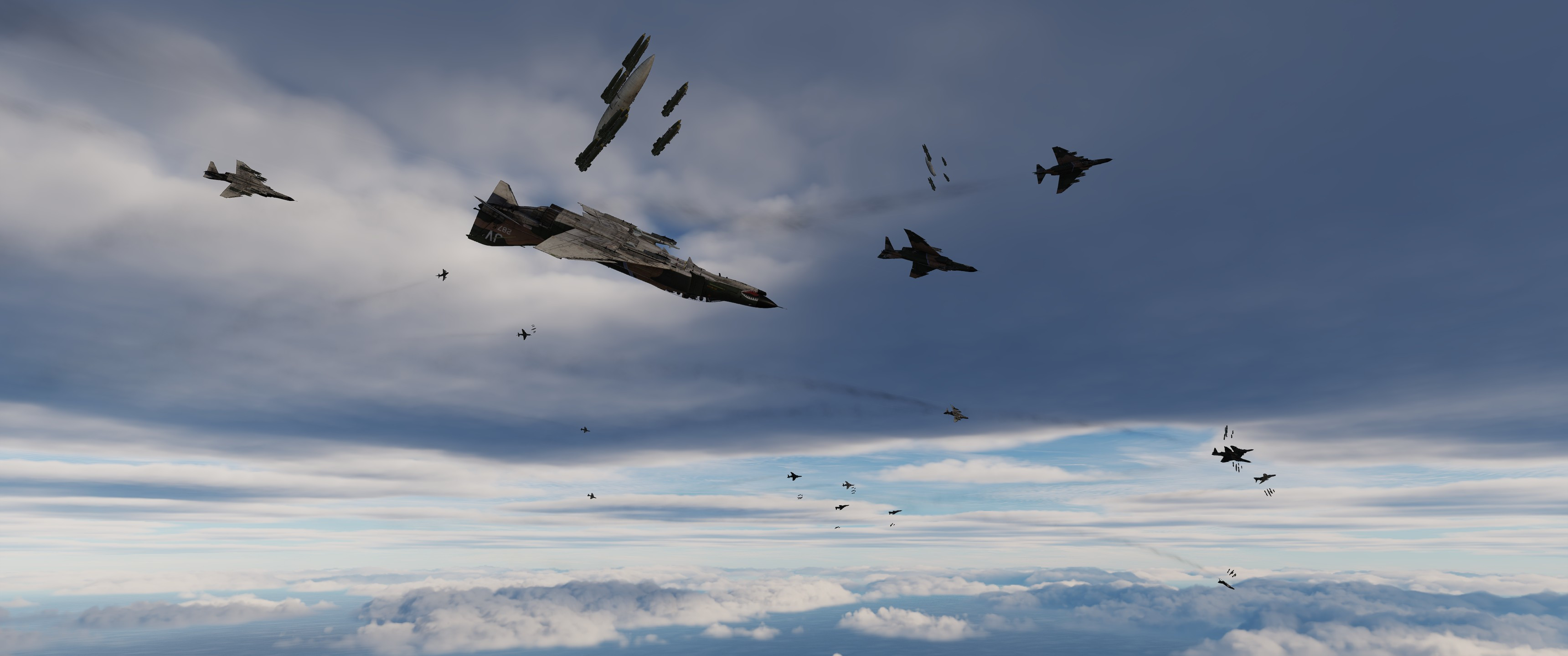
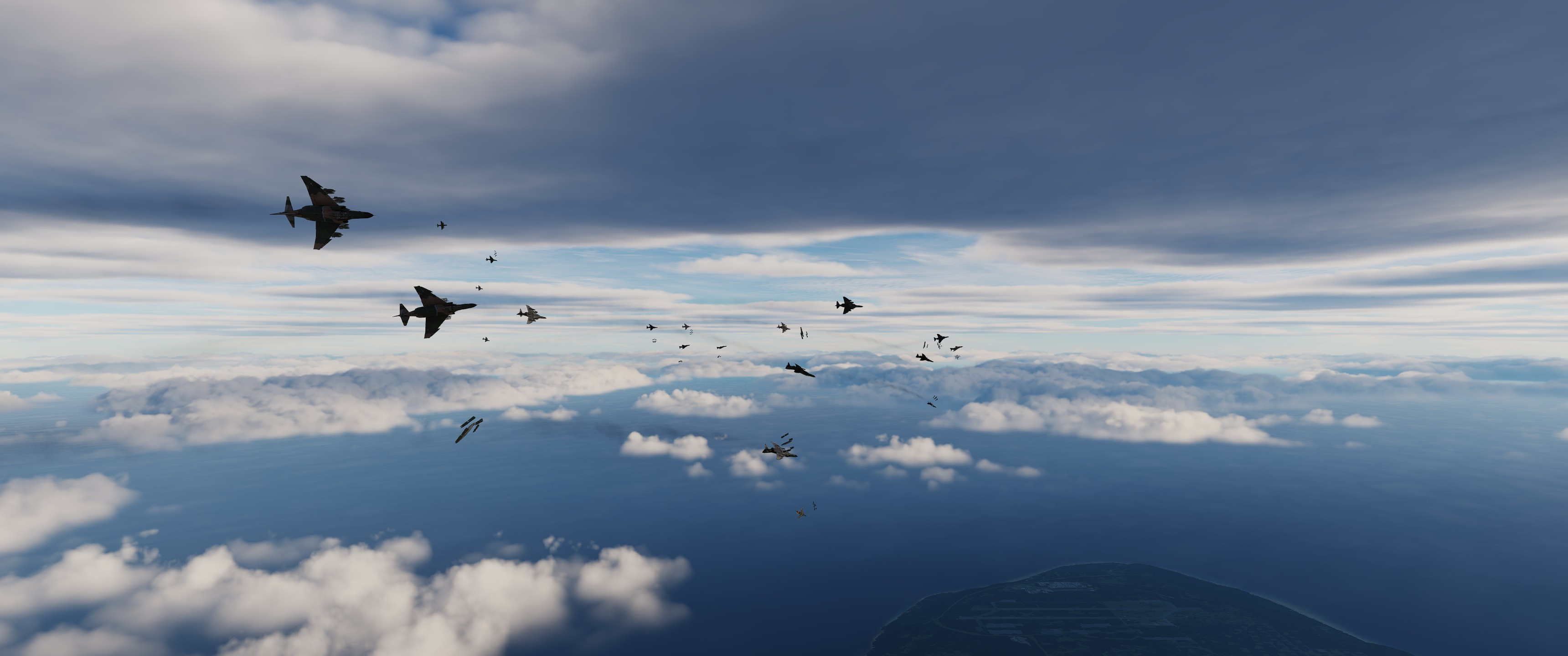
More tests need to be done. For instance, what happens if the elements are spread in a very wide formation and only one of the extremes is targeted, or if such aircraft is simply fairly close to the target itself? Would the whole formation defend?
Another example: what happens when the targeted aircraft do not have the means of detecting the missile with their RWR or similar?
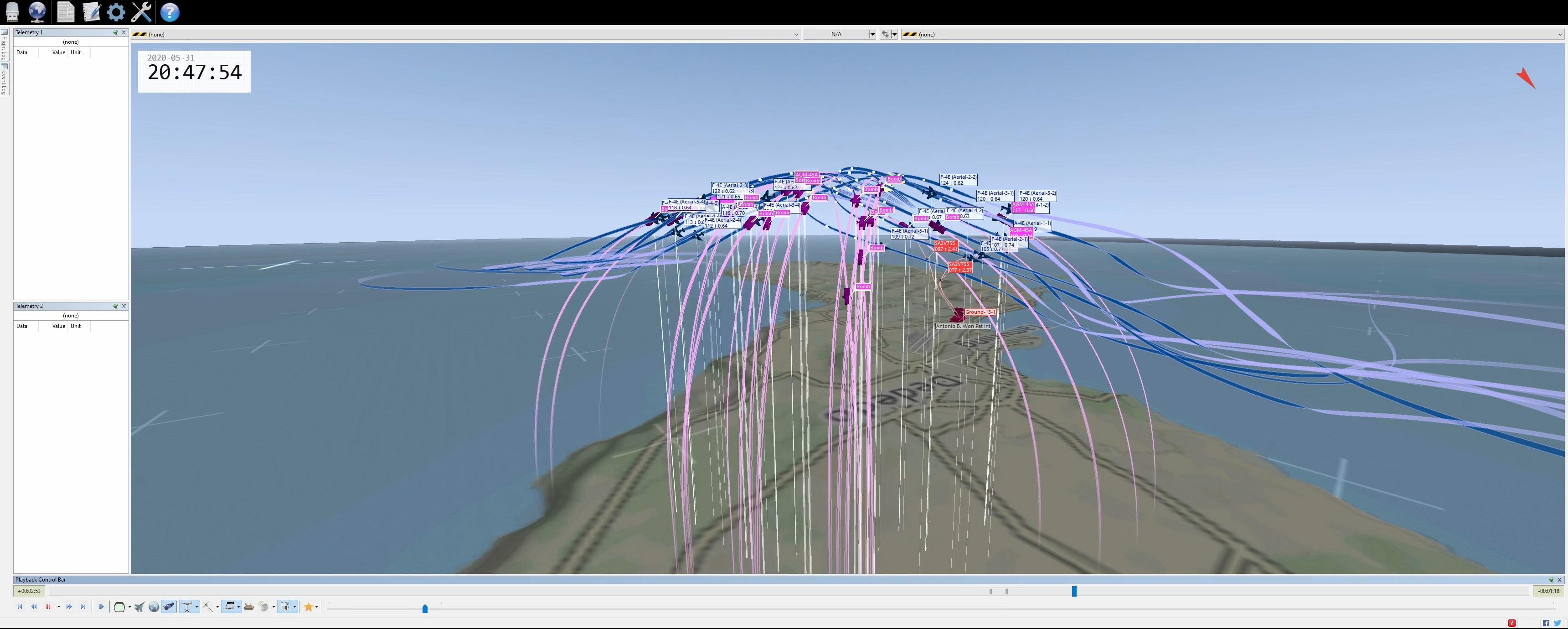
Anyway, there will be time to check the details of the logic later. The first impression is really good, and I am already wondering if the same logic can be applied to AIM-54 PSTT shots et similia.
Well done ED!
 FlyAndWire