

Unplanned initially, I later expanded the discussion about the Sync-Z-Turn to show how its fundament concepts can be applied (sometimes forcibly and with several adjustments) to other modules:
- Sync-Z-Turn: Explanation (F-4E)
- Mirage F1;
- F-14 Tomcat;
- F-5E-3 Tiger II;
- MiG-21bis;
- MiG-29 Fulcrum.
Video
The radar scope of the Fulcrum is quite different from NATO’s counterparts, as returns are repeated on the HUD, thus allowing the pilot to maintain attention and focus there rather than looking elsewhere – which, I guess, they should do anyway to maintain SA… Anyway, I have not touched this module since LOMAC, but it is still one of the most enjoyable to fly, especially after the upgrade to PFM and 3D cockpit.
Adjusting the fundamental mechanics of the Sync-Z-Turn to the MiG-29 is straightforward, and the only minor inconvenience is the lack of clearly readable azimuth references. Nevertheless, thanks to its quite capable radar, it makes the flow somewhat similar to the F-4E’s, but much simpler.
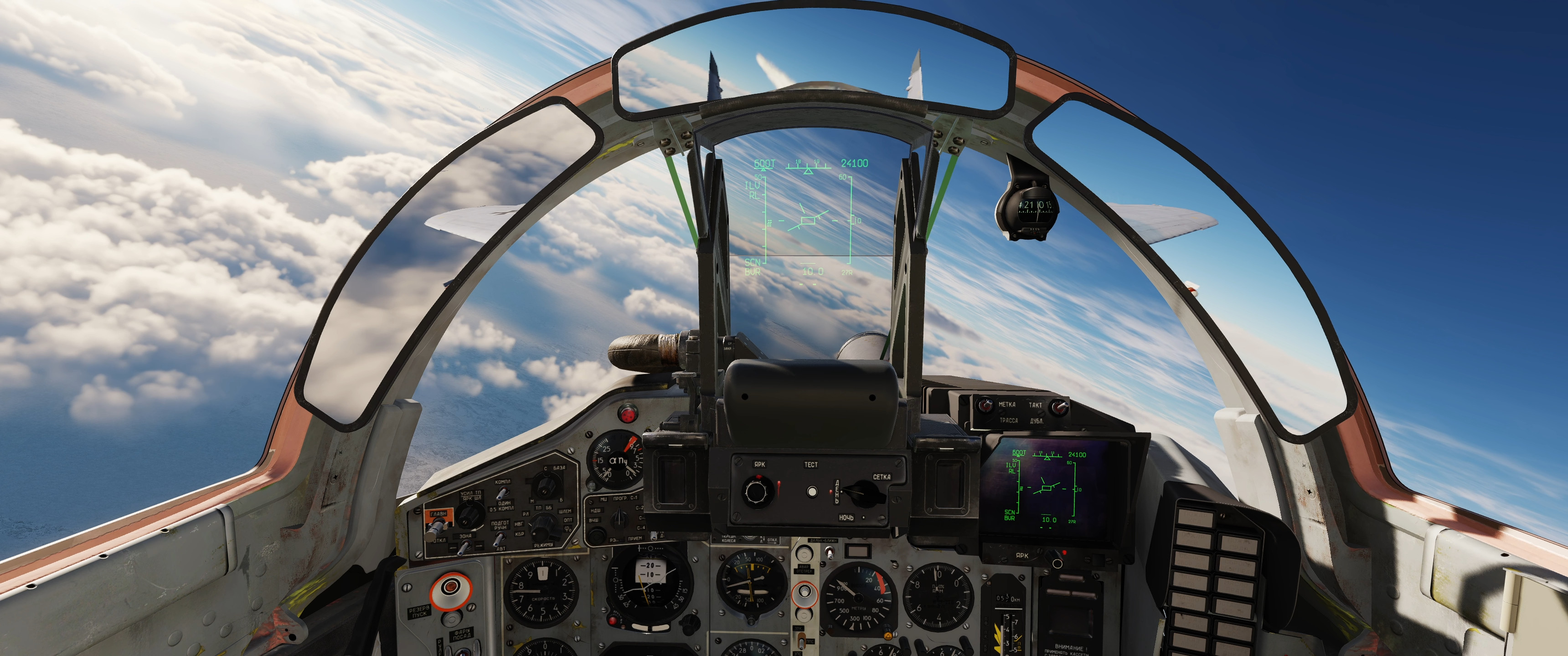
In this scenario, four Luftwaffe F-4E, performing as ICE F-4F, are intercepted by the German MiG-29s. The Phantoms are flying much faster than the targets I used in other examples, to show how geometry and angles change. In particular, note how the drift was quite conspicuous, something I had to address by adding even more power to the Fulcrum.
Most intercept techniques require or suggest a 5:4 speed ratio, with the intercepting fighter having a speed advantage. The Sync-Z-Turn follows the same logic: intuitively, a fighter slower than the target cannot expect to reduce the separation and set in its rear quarter.
Besides that, the flow is pretty much the same. Once the bogey’s returns are represented on the scope, the drift is assessed. Then, the fighter turns to a defined sync azimuth and monitors the AoB. Lastly, the MiG performs a conversion onto the bogey’s 6’.
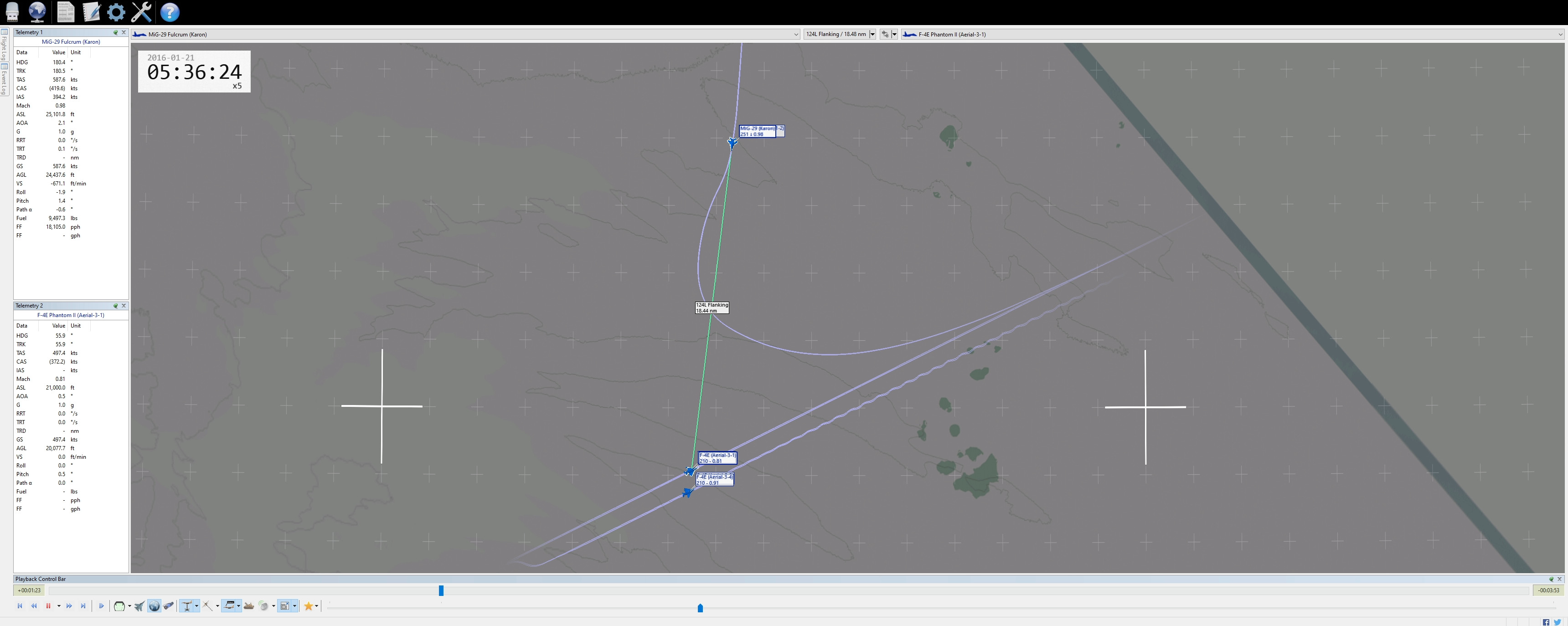
As you can see, the procedure is fundamentally the same, and it may come in handy along the EOS and the radar to speed up VID, tanker rejoins, intercepts and so on.
 FlyAndWire