
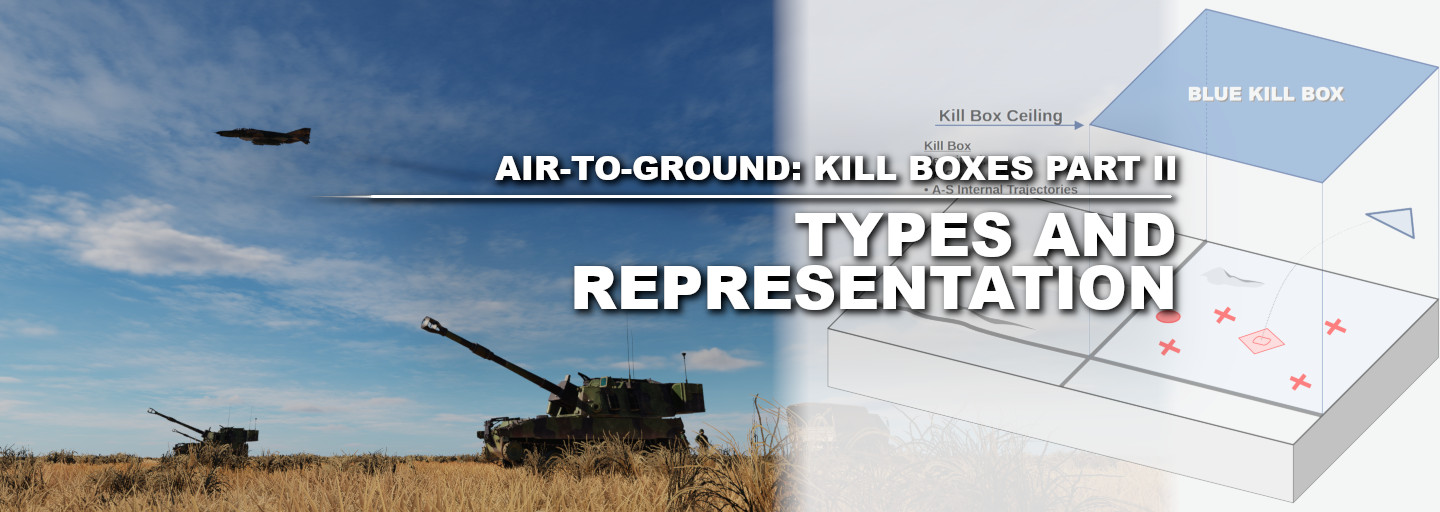

The Kill Box can follow pre-defined boundaries using an area reference system, but also follow well-defined terrain features, grid coordinates or a radius from a centre point. They can be planned or immediate, and should be cancelled when no longer needed.
Two types of Kill Boxes are used, Blue and Purple:
- Blue Kill Box: permits air-to-surface fires without further coordination;
- Purple Kill Box: same as the Blue Kill Box, but permits the integration of surface-to-surface indirect fires.
Characteristics of the Kill Boxes are:
- Target Area: the location and size of the Kill Box are determined by the expected or known location of targets in a specified area.
- Airspace: the airspace block located above the Kill Box target area is protected and extends from the surface (or coordinating altitude, if established), up to a determined ceiling. The airspace for Purple Kill Boxes includes a floor and a ceiling to enable separation between the aircraft delivering air-to-surface fire, trajectories of surface-to-surface indirect fires, surface-to-air fires, and other aircraft.
Kill Box Representation
Kill Boxes are listed according using the following details:
- type: BKB for Blue Kill Box and PKB for Purple Kill Box;
- measure number: value assigned by the commander, between 001 and 999;
- establishing HQ;
- affected altitudes;
- date-time group (DTG): defines when the kill box is “established” and “cancelled”.
On a map, the kill box is portrayed by a solid black line defining its area borders.
Example
The following is an example of how kill boxes are represented and outlined.
Blue Kill Box graphical representation
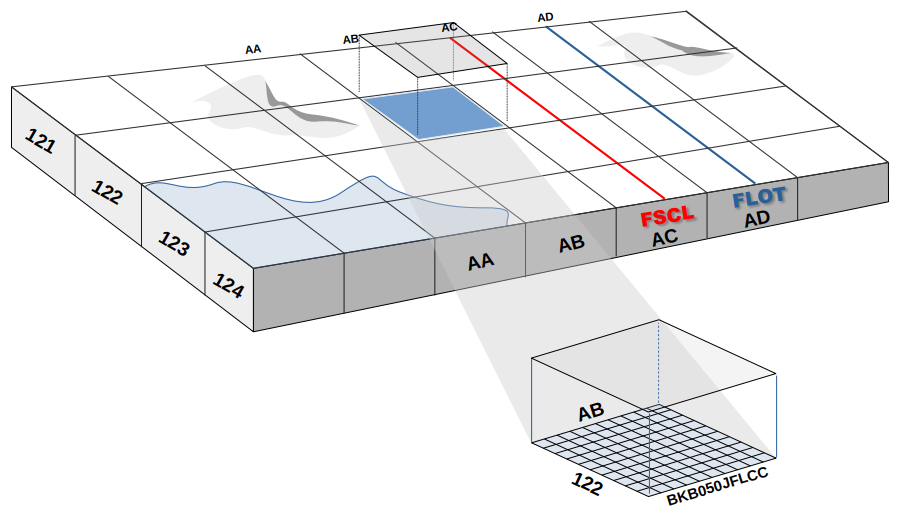
JFLCC Blue Kill Box Chart
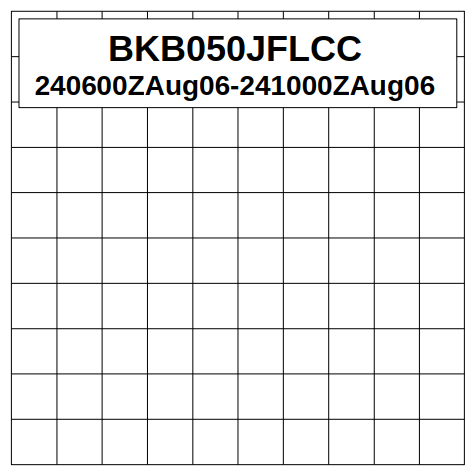
- BKB: Blue Kill Box;
- 050: 50th Kill Box established by this command;
- JFLCC: Joint Force Land Component Commander (the establishing headquarters);
- 240600ZAug06-241000ZAug06: Established 24 August at 0600 Zulu. Cancelled 24 August at 1000 Zulu.
Kill Boxes: Types
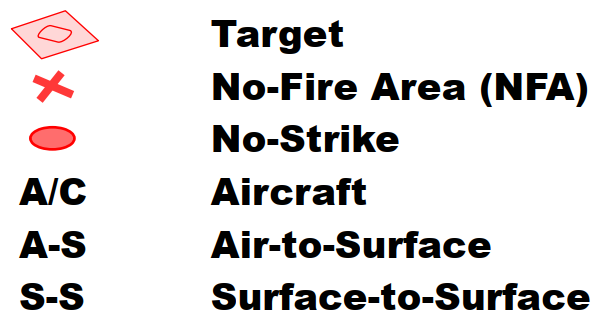
The sketches below use the following legend:
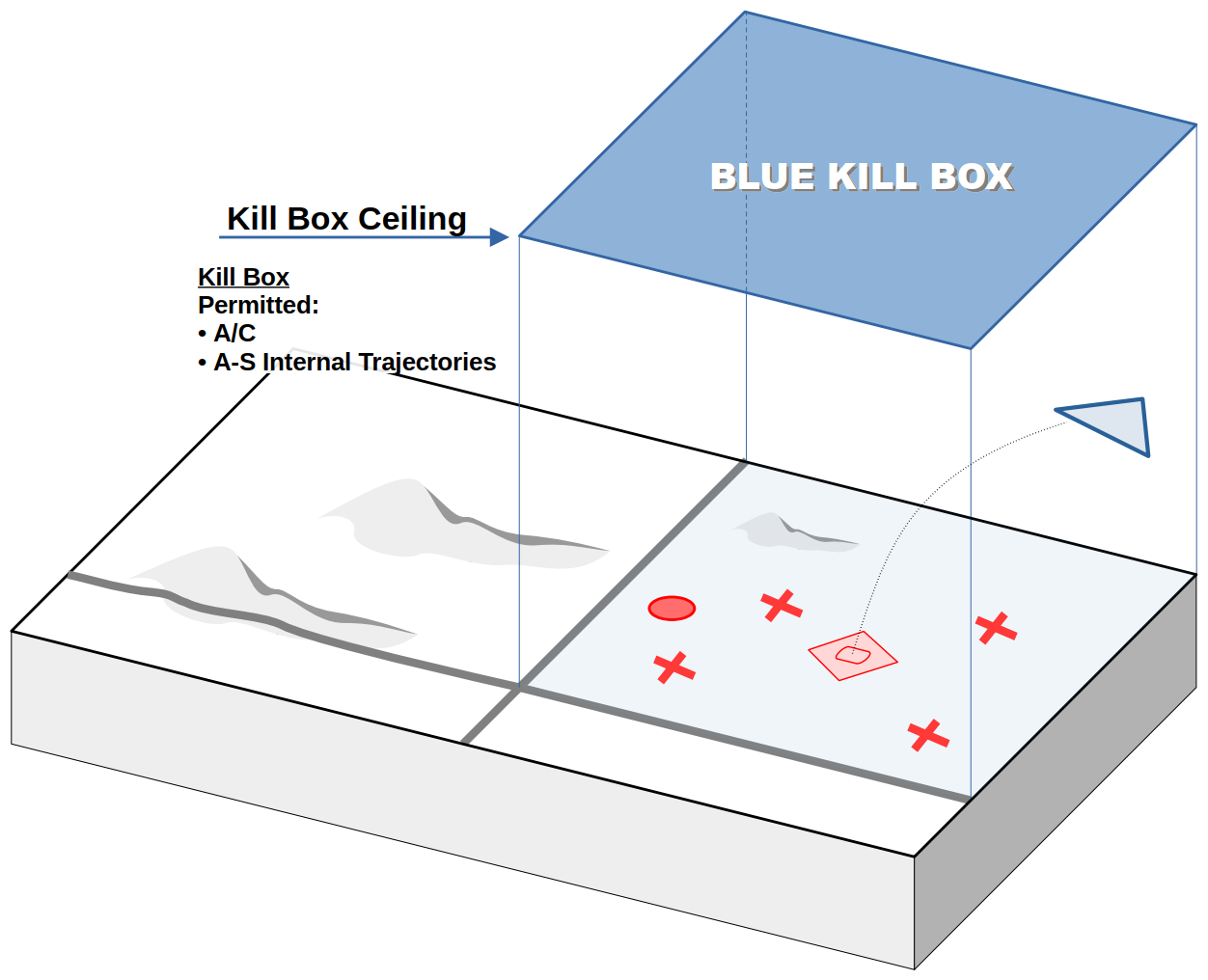
Blue Kill Box (BKB)
Purpose and features of the Blue Kill Box:
- Permits air interdiction in the Kill Box without further coordination with the establishing HQ;
- If the Kill Box is active, Air-to-Surface munitions (and their trajectories) delivered by aircraft not assigned to the BKB must be coordinated;
- Aircraft not assigned to the BKB are restricted from entering unless coordinated;
- Surface-to-Surface direct fires are not restricted by the establishment of a Blue Kill Box;
- A BKB minimises restrictions whilst protecting aircraft: effect and trajectories of surface-to-surface indirect or direct fires are not allowed to pass through the Blue Kill Box.
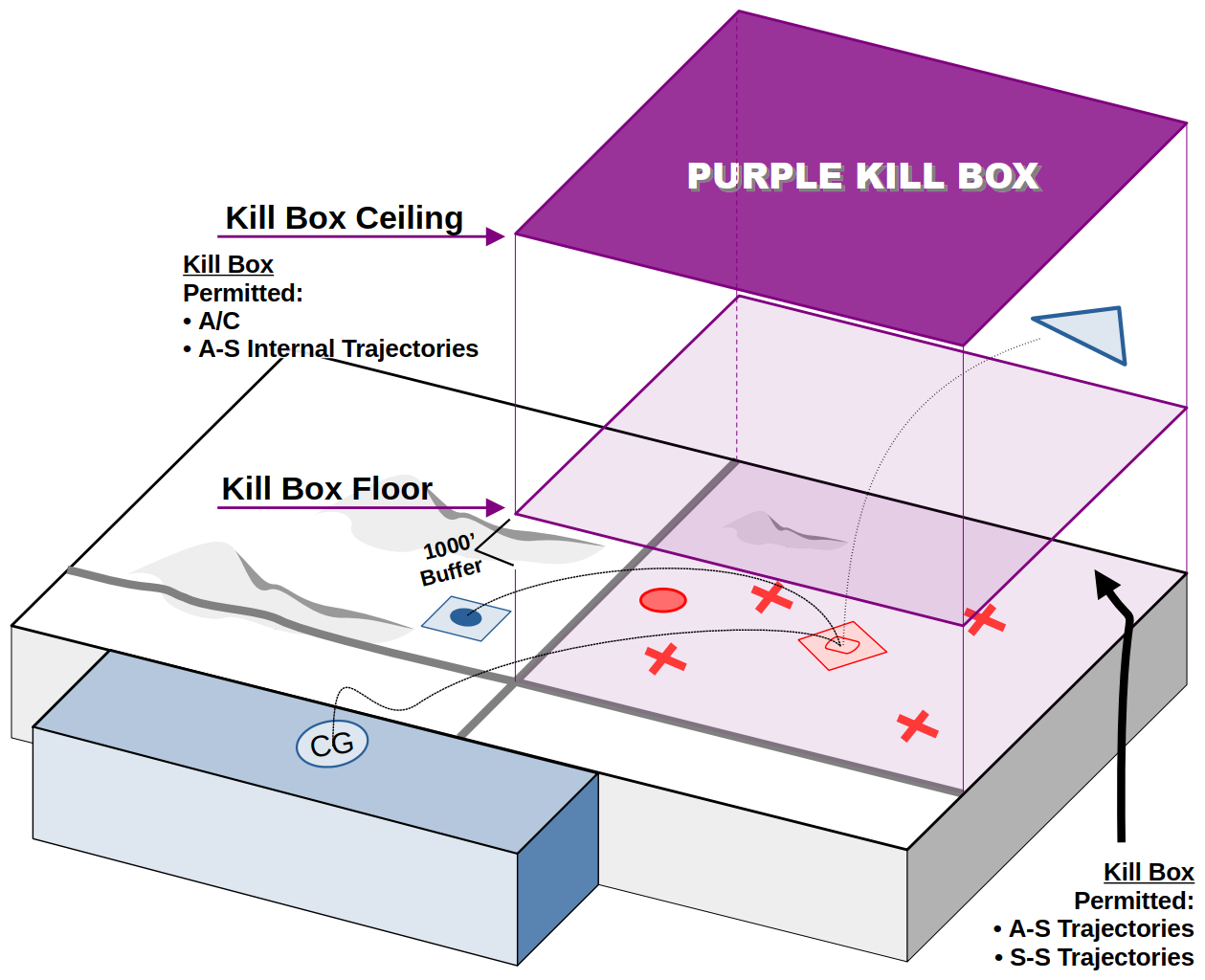
Purple Kill Box
Purpose and features of the Purple Kill Box:
- Permits air interdiction with air-to-surface fires, integrating surface-to-surface indirect and direct fires without further coordination in the Kill Box;
- The Purple Kill Box allows joint fires in the Kill Box to create synergistic effects with maximum potential for engaging targets;
- Surface-to-Surface direct fires are not restricted by the establishment of a PKB;
- Air-to-Surface and Surface-to-surface indirect fires are deconflicted by altitude separation;
- Aircraft not assigned to the Purple Kill Box are restricted from entering unless coordinated;
- A Purple Kill Box minimises restrictions whilst protecting aircraft: effect and trajectories of surface-to-surface indirect or direct fires are not allowed to pass through the PKB.
 FlyAndWire