Kill Boxes Part III: Planning and Terminology
A Kill Box requires minor coordination and can yield high effect over the designated area. However, several parameters must be taken into account before “Establishing” the Kill Box.
Before moving into the Kill Box planning stage, it is worth visualising how a kill box is represented and its types.
Kill Boxes are fundamental means of coordinating fire into a defined area, maximising effects, safety, and efficiency while minimising the need for additional communication and tight control. This article introduces the Kill Boxes and related concepts, such as ACM and FSCM.
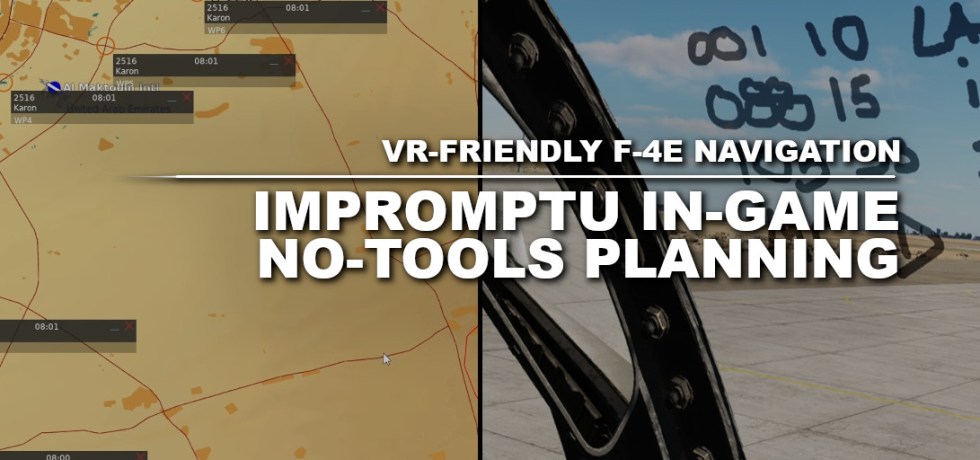
The idea behind this video came from a post I read on ED’s forum about having an in-game F-4E kneeboard page that does pretty much everything (from course and distance to time and fuel). An idea I found very much not feasible.
However, with a bit of the usual ingenuity and the very same rule of thumbs we apply in-cockpit, we can definitely plan something basic in just a few minutes. A more complex solution definitely requires something ad hoc; something that should come from ED itself, and should be fully integrated in DCS.
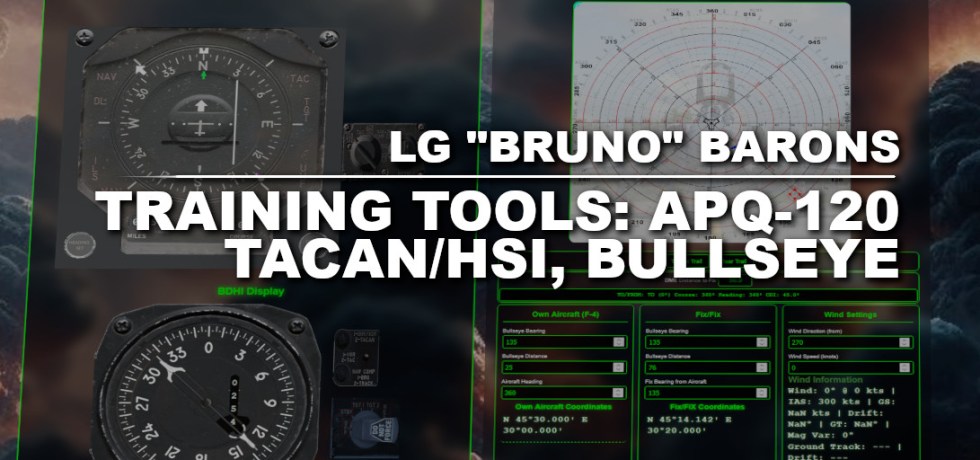
LG “Bruno” Barons has created additional training tools useful for any aircraft, especially the F-4E Phantom II: APQ-120, TACAN/HSI simulator and Bullseye trainer.
This 1970s technique is one of the least intuitive I have discussed so far. However, after going deeper into its mechanics, it turned out to be very flexible and quite easy to follow.